A little about me...

Hi, I'm Zohaib (Zo-hey-bah) and I am a student at Georgia Tech majoring in Computer Engineering who enjoys problem-solving, working with others, and continuously learning. I am proficient in JavaScript, Python, and SQL, I have built user application with React and Redux, managed data with a PostgreSQL database, and built backend servers with Flask and Express. Currently, I am actively seeking opportunities where I can apply my skill as an engineer, continue to grow professionally, and make an impact . Feel free to reach out: zrajan3@gatech.edu.

Interests: Cybersecurity & Computer Hardware

Career Goals

In this next five years I hope to have completed my graduate degree via the BS/MS program at GT and starting my career as an engineer focusing on making computer hardware more secure. A few years into my career I would love to be in a leadership position, a manager/team lead, where I have a team of people to lead

Projects

FitFolio

View Project

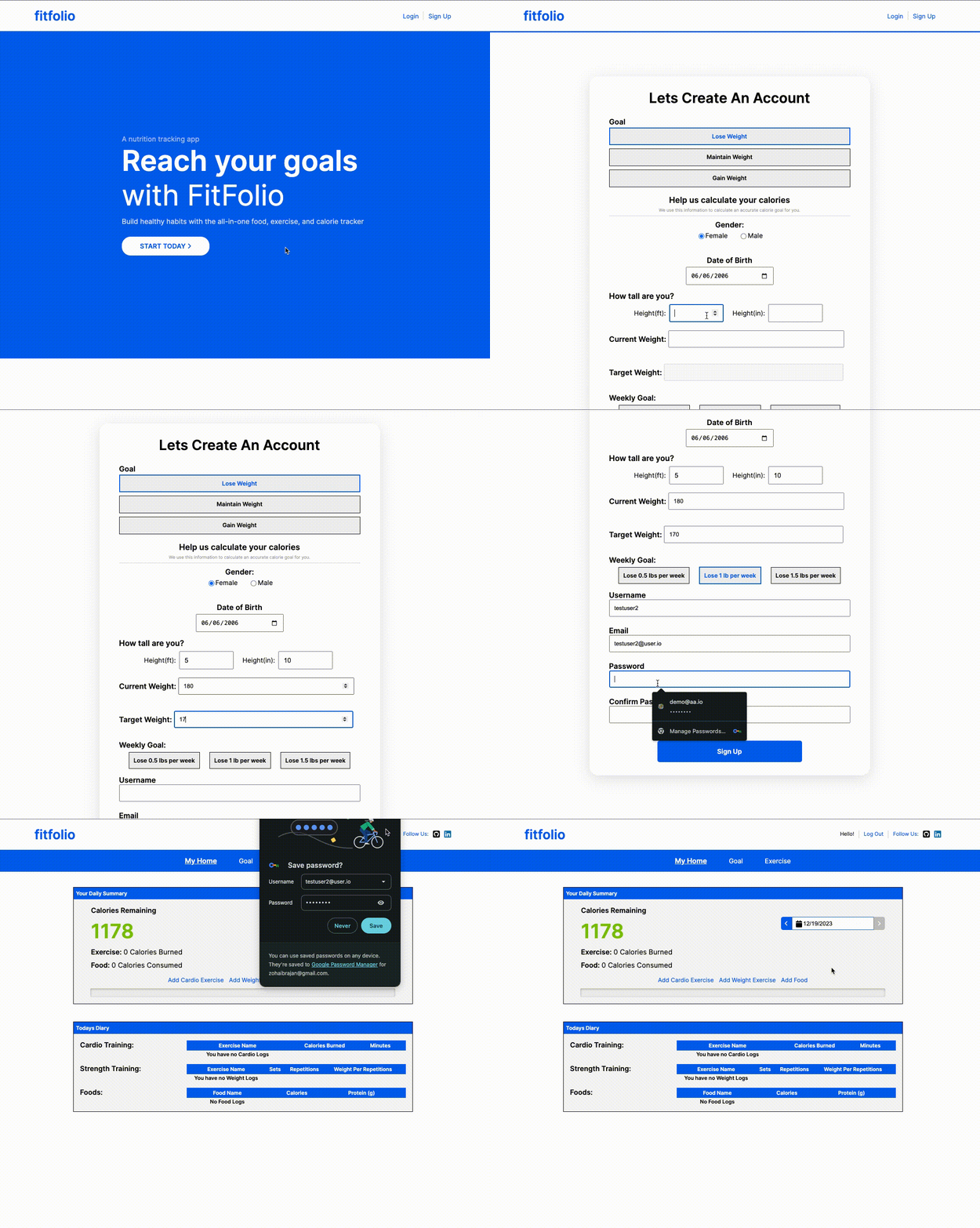
FitFolio is a fitness tracking application built with React, Redux, JavaScript, Python, PostgreSQL, and Flask to create a reliable, user-friendly platform for people who want a simpler way to manage their health and workout progress. The main goal of FitFolio is to remove the clutter and confusion that often comes with many fitness apps by focusing on a clean design, smooth navigation, and features that make progress tracking feel straightforward rather than overwhelming. Instead of forcing users to deal with overly complicated dashboards or unnecessary tools, FitFolio is designed to make it easy to log workouts, monitor personal improvement, and stay consistent with fitness goals over time.

On the front end, React and JavaScript were used to create a responsive and interactive interface that allows users to move through the application smoothly. Redux supports this experience by managing application state efficiently, making sure workout data, progress updates, and user information remain organized and accessible throughout the app. This combination helps FitFolio deliver a seamless user experience where information updates quickly and consistently without disrupting the flow of the platform. The design emphasizes usability, making it approachable for both beginners who are just starting their fitness journey and more experienced users who want a convenient digital tool to support their routine.

The back end of FitFolio is powered by Python and Flask, which work together to handle core functionality such as processing requests, managing user data, and connecting the front end to the database. PostgreSQL serves as the application’s database, providing a structured and dependable way to store workout records, progress metrics, and account information. This full-stack structure allows FitFolio to combine a polished interface with strong data management, giving users a dependable platform they can return to regularly as they build healthier habits.

A key strength of FitFolio is its emphasis on progress tracking. Users are able to record workouts and monitor how their performance changes over time, which can help build motivation and accountability. By making progress visible and easy to understand, the app encourages consistency, which is one of the most important factors in achieving long-term fitness results. Whether a user is trying to increase strength, improve endurance, lose weight, or simply maintain a healthier lifestyle, FitFolio provides a practical way to stay aware of that progress.

Overall, FitFolio is more than just a workout logging tool. It is a thoughtfully developed application that blends modern web technologies with a simple and focused user experience. By combining React, Redux, JavaScript, Python, PostgreSQL, and Flask, the app demonstrates both technical depth and practical value. FitFolio shows how full-stack development can be used to solve everyday problems in a way that is effective, accessible, and engaging. Its streamlined design and commitment to simplicity make it a strong example of how technology can support personal wellness and help users take greater control of their fitness journey.
SavoryScoot

View Project

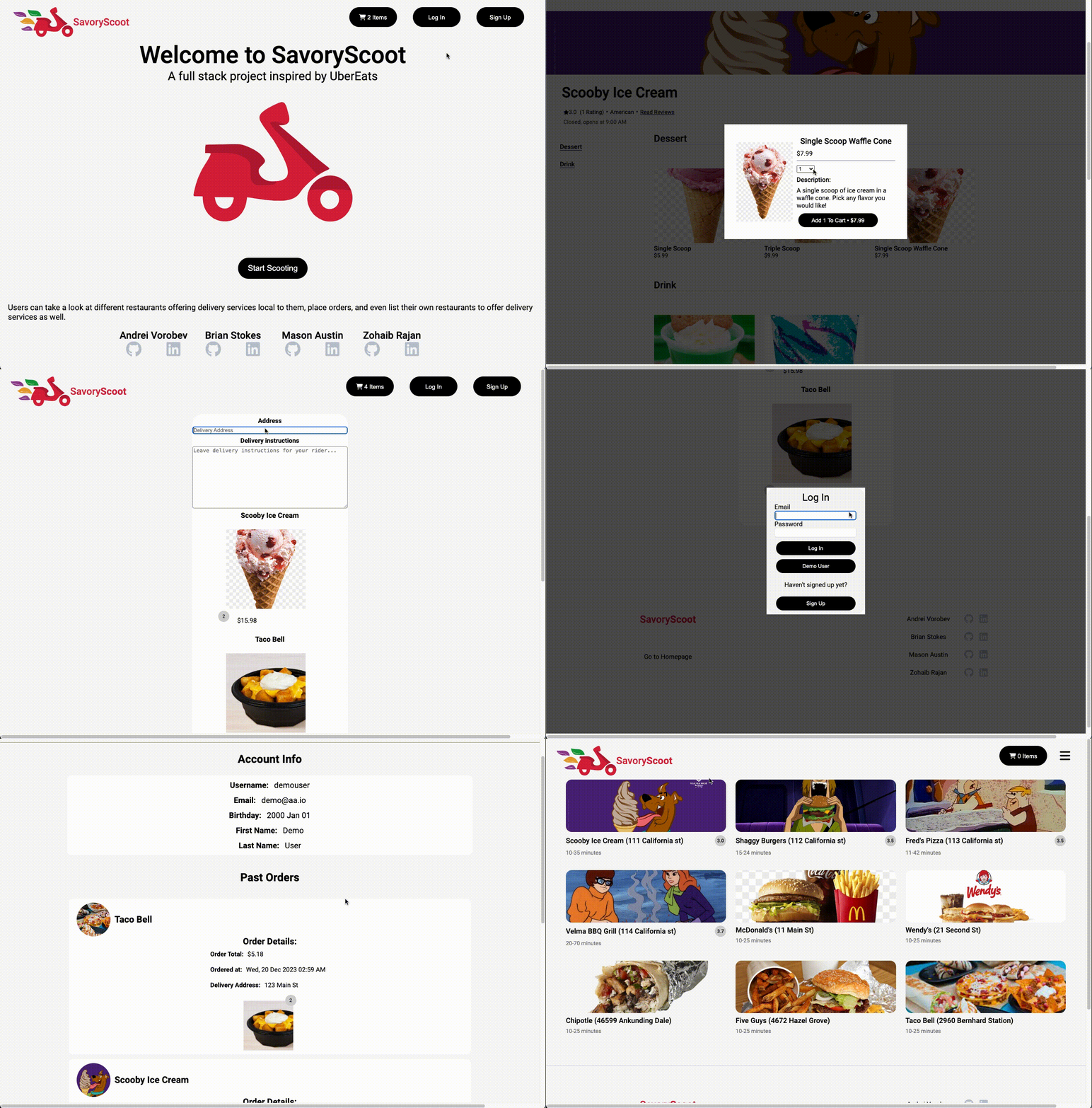
SavoryScoot is a full-stack food delivery application created through a collaborative effort between a team of four engineers. Working together, we designed and developed a streamlined, user-friendly platform that makes ordering food simple, efficient, and convenient. Built with React, Redux, JavaScript, Python, PostgreSQL, and Flask, the app combines a modern front-end experience with a strong back-end foundation to deliver a seamless ordering process from start to finish. The goal of SavoryScoot was to create a digital solution that removes friction from food delivery and allows users to browse, select, and order their favorite meals with ease.

Because the project was built by a team of four engineers, collaboration played a major role in its success. Each team member contributed to different parts of the development process, from designing the user interface to building back-end logic, managing data flow, and organizing the database structure. This teamwork allowed us to divide responsibilities effectively while maintaining a shared vision for the product. Through collaboration, communication, and problem-solving, we were able to build an application that was not only functional but also polished and intuitive for users.

On the front end, React and JavaScript were used to create an interactive and responsive user interface. Users can move through the app smoothly, whether they are browsing restaurant options, viewing menu items, adding food to their cart, or reviewing their order before checkout. Redux helped manage the application’s state, ensuring that important information such as selected items, cart contents, and user interactions remained organized and consistent across the platform. This made the experience feel seamless and reliable, which is especially important in an app where users expect speed and convenience.

On the back end, Python and Flask were used to build the application’s core functionality and handle communication between the client side and the database. PostgreSQL served as the database system, providing a structured and dependable way to store user accounts, restaurant data, menu listings, and order details. This full-stack architecture gave SavoryScoot the ability to support a complete food ordering workflow while maintaining both performance and scalability. By connecting these technologies, we were able to create an app that not only looks clean and modern but also performs efficiently behind the scenes.

A key feature of SavoryScoot is its focus on simplicity. Many users want a food delivery app that is easy to navigate and does not overwhelm them with unnecessary steps or cluttered pages. SavoryScoot addresses that need by keeping the process straightforward: users can quickly discover meals, place orders, and have their food delivered to their doorstep with minimal hassle. This emphasis on usability makes the app approachable for a wide range of users and highlights the importance of designing technology around convenience and everyday needs.

Overall, SavoryScoot represents both strong technical execution and effective teamwork. By combining modern web development tools with a user-centered design approach, our team created a food delivery app that is practical, accessible, and engaging. The project demonstrates experience in full-stack development, collaboration in an engineering team, and the ability to build a real-world application that solves a common problem. SavoryScoot is more than just a coding project; it is an example of how thoughtful design and coordinated teamwork can come together to create a smooth and enjoyable digital experience.

Discovery Project

View Project

Work in progress...

Skills

All technologies were used to build my projects

  • Python

  • Javascript

  • React

  • Redux

  • Node

  • Docker

  • Express.JS

  • Flask

  • PostgreSQL

  • HTML

Contact Me

Primary Email: zrajan3@gatech.edu
Primary Phone: (832) 627-9128